
Brazil Wildlife Expedition: From Atlantic Forest Endemics to Pantanal Giants
Updated: 1 hour ago
Guides: Alejandro Pinto & Alex Mesquita
Participants: feel free to see their spectacular photography work on their personal pages by clicking on the links!
Andreas Engelhard.
Bauke Kortleve: https://pbase.com/geertbauke/root
Sandra Kinderknecht: https://kinderknecht.smugmug.com/Brazil-Pantanal-August-2026/n-PsKJ6G
Lisa McDondald.
Steve Mills. https://www.facebook.com/steve.mills.7737769
Mark Fletcher: https://www.markfletcherphoto.com/
all photos posted here were taken during our trip!
Total Species Recorded: 515 Birds ~30 Mammals & Reptiles
This 3.5-week expedition across Brazil’s most iconic biomes was a resounding success. The first leg of the journey took us deep into the fragmented, hyper-biodiverse Atlantic Forest (Mata Atlântica), targeting localized endemics across varying altitudinal zones. The second leg transitioned into the vast tropical wetlands of the Pantanal, where our focus expanded from spectacular birds to tracking South America’s apex predators and large mammals.

The Ultimate Number: Reaching 515 bird species stands as a testament to the incredible biodiversity of these two contrasting biomes.
The Mammal & Reptile Bonus: Nearly 30 species documented, heavily anchored by the mammal-rich floodplains of the Pantanal
Part 1: Atlantic Forest, the endemics hunt
The Atlantic Forest (Mata Atlântica) is one of the most critically endangered global biodiversity hotspots, making it a dream destination for any birdwatcher or bird photographer. Though centuries of fragmentation have left only a fraction of its original cover, what remains holds a staggering concentration of life. Unlike the expansive Amazon, the Atlantic Forest's unique geography—stretching across sharp altitudinal gradients from coastal lowlands to high-altitude mountain peaks—has driven incredible evolutionary isolation.

During our trip we targeted the unique birds of this area by travelling a carefully planned route that included the distinct elevations and habitats that are home to the endemics of this region. We started our trip at the pristine, low-to-mid elevation forests of Legado das Águas. Here we found many of our main targets, including several range restricted birds.

We were super lucky and got to watch very good flocks that included Tanager, Woodcreepers, Antbirds and Trogons. A Solitary Tinamou walking very relax on the main gravel road was with no doubt a highlight! Or the Hooded Berryeater who came close to us in silence and the amazing Buff-throated Purpletuft! The high pitch song of the Bare-throated Bellbird accompanied us everyday and during our 3 days there we exceed 120 species.


Next we travelled to the high-altitude Araucaria pine stands of Campos do Jordão, which is home to some specialist, like the Araucaria Tit Spinetail and the beautiful Vinaceous-breasted Amazon. We got spectacular views of both species, as well as Sharp-billed Treehunter, Sharp-tailed Streemcreaper, Golden-winged Cacique among many others!


The dramatic mountain slopes of Serra do Mar State Park near Ninho da Cambacica are home to several birds restricted to the lower elevations of the humid forest and here we were already "cleaning up" and adding species to our growing list! We got excellent views of Orange-eyed Thornbill, Rufous-sided Crake in the wetlands, the uncommon Chestnut-backed Antbird, the localized Lemon-chested Greenlet and the last missing toucan species - the Spot-billed Toucanet!

We then explored the cloud forests of Itatiaia National Park from the lower elevation at the park´s main entrance to the higher areas along the agulhas negras road which leads to some of the highest peaks in Brazil. Due to elevation the set of birds changes and also you can find some very range restricted birds. We started the morning with the amazing song of the Black and Gold Cotinga (one of our main targets!) we quickly got spectacular views and enjoyed its dramatic song! We quickly moved towards a small flock with a Large-tailed Antshrike male singing in the bamboo bushes! and kept birding along the road until we finally reached a high area and watched one of the most range restricted birds here, the Itatiaia Spinetail!

We ended the first leg of our trip in the understory of Macuquinho. Macuquinho is located in the buffer area of Serra do Mar with some wetlands and open areas nearby which provide habitats for a very interesting mix of species! We kicked of our first night there with two spectacular birds: Long-trained Nightjar and Rusty-barred Owl! During our first morning we focused on probably the most localized and criticaly endangered specie of this part of the trip, the Marsh (Sao Paulo) Antwren. They are well preserve wetlands specialist and their populations is estimated in less than 700 individuals. It was a privileged to observe a male and female catching insects in the dense vegetation.


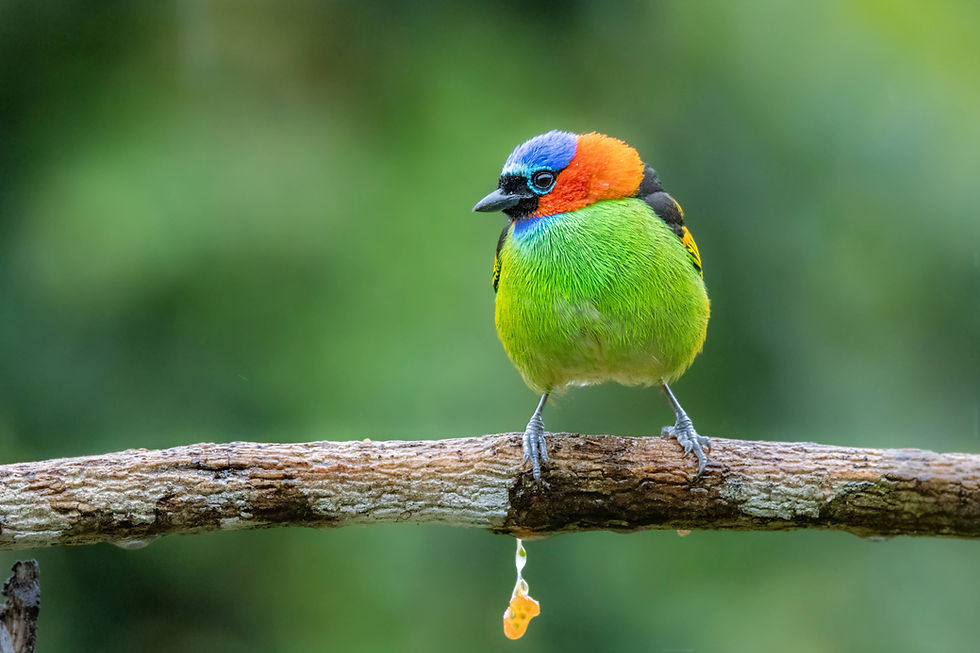
Some of the best birds of this part of the trip: Marsh (Sao Paulo) Antwren, Solitary Tinamu, Spot-winged Wood Quail, Frilled Coquette, Red-and-white Crake, Ornate Hawk Eagle, Tawny-browed Owl, Vinaceous-breasted Amazon, Large-tailed Antshrike, White-bearded Antshrike, Slaty Bristlefront, Black-billed Scythebill, Sharp-tailed Streamcreeper, Hooded Berryeater, Black-and-gold Cotinga, Buff-throated Purpletuft, Bare-throated Bellbird, Cinnamon-vented Piha, Sharpbill, Atlantic Royal Flycatcher, Black-capped Piprites, Brassy-breasted- Gilt-edged, Red-necked and Green-headed Tanagers.


Part 2: Cerrado and Pantanal, in search of wildlife.
In the heart of Brazil, the Cerrado and the Pantanal are among the country's most spectacular and biodiverse ecosystems, offering extraordinary opportunities for bird and wildlife photography. Throughout the journey, our group tracked predators, photographed colorful birds, and experienced wildlife in some of Brazil's most iconic landscapes.

From the open landscapes and gallery forests of the Cerrado to the vast wetlands and winding waterways of the Pantanal, this journey offered unforgettable encounters with nature in its purest form. During this part of our trip, we recorded more than 200 bird species and over 20 species of mammals and reptiles.
Chapada dos Guimarães – Exploring the Cerrado
Our journey began in the region of Chapada dos Guimarães, an impressive landscape shaped by dramatic sandstone cliffs, open savannas, grasslands, and patches of forest. Located within the vast Cerrado biome, this region is home to an incredible diversity of birds and mammals.

The Cerrado is often described as one of the world's most important biodiversity hotspots, and our time here provided excellent opportunities to photograph some of its characteristic wildlife. Colorful birds and primates, were among the highlights, while the beautiful landscapes of Chapada dos Guimarães provided a spectacular backdrop for our photography.

We started our trip with a randon stop on a secondary road, we had a rush hour with several birds species flying back and forth the area, including several restricted to this biome: Coal-crested Finch, Black-throated Saltator, White-banded Tanager, Cinnamon Tanager, Rusty-backed Antwren, Blue-winged Macaw, Yellow-faced Parrot and a quick view of a Sharp-shinned Hawk, what a start!
Pouso Alegre – The Transition into the Pantanal
From the Cerrado, we continued toward the Pantanal, where the landscape gradually transformed into one of the largest and most spectacular wetlands on Earth. Our stay in the Pouso Alegre region offered the first taste of the incredible wildlife abundance that makes the Pantanal such a legendary destination for nature photographers.

Here, wildlife is often encountered close to the roads and ponds. A remarkable diversity of birds made every excursion an opportunity for new sights, but also mammals were part of our day and night excursions, including: Deer, Peccaries, monkeys, Lowland Tapir, Coatis, Fox and the amazing Ocelot!

The Transpantaneira – The Wildlife Highway of the Pantanal
The Transpantaneira is undoubtedly one of the most famous wildlife roads in South America. Originally built as a transportation route, it has become one of the best places in the world for observing and photographing the extraordinary wildlife of the Pantanal.

Crossing hundreds of bridges and passing through an ever-changing mosaic of wetlands, grasslands, and forest, the road offers almost constant opportunities for wildlife encounters. Caimans rest beside the road, Capybaras feed along the water's edge, colorful birds appear around every bridge, and mammals can be encountered throughout the day.

For wildlife photographers, the Transpantaneira is much more than a road—it is an unforgettable journey through one of the richest natural landscapes on the planet.
Porto Jofre – In Search of the Jaguar
The most anticipated chapter of our journey took us to Porto Jofre. Located at the end of the Transpantaneira, this region is internationally recognized as one of the best places in the world to observe and photograph the iconic Jaguar.

Exploring the Cuiabá River and its surrounding waterways by boat, we searched for one of South America's most iconic predators. The combination of patience, anticipation, and the incredible scenery of the Pantanal made every outing an adventure, we had several sights during our 3 days there, including female jaguars with cubs, males resting, cubs playing and Giant River Otters on alert by a Jaguar presence. Those days were truly an amazing wildlife experience.

Our efforts were rewarded with unforgettable encounters, including the opportunity to also enjoyed encounters with Giant River Otters, Yacaré Caimans, Yellow Anacondas, and an extraordinary variety of birds along the rivers.

Pousada Piuval – Wildlife in the Northern Pantanal
Towards the end of our trip we continued at Pousada Piuval, one of the most productive areas for experiencing the rich wildlife of the northern Pantanal. The surrounding habitats include open grasslands, wetlands, forest patches, and seasonal water channels, creating ideal conditions for an exceptional diversity of wildlife.

This area provided memorable opportunities to photograph species such as Red Brocket, Pampas Deer, and the amazing and unique Giant Anteater during the morning sessions, while the birdlife remained equally impressive throughout our stay.

Mammals: Lowland Tapir, South American Coati, Azara's Capuchin, Black-tailed Marmoset, Crab-eating Fox, Bearded Capuchin, Azara's Agouti, Brazilian Rabbit, Collared Peccary, Marsh Deer, Red Brocket, Pampas Deer, Gray Brocket, Capybara, Giant River Otter, Giant Anteater, Ocelot, and Jaguar.

Reptiles: Yellow Anaconda, Yacaré Caiman, Golden Tegu and Chicken Snake.
More than 200 bird species completed an unforgettable photographic journey through two of Brazil's most remarkable ecosystems. From the landscapes of the Cerrado to the endless waterways of the Pantanal, this trip was a celebration of wildlife, photography, and the extraordinary natural diversity of Brazil.




Comments